
A․ Overview of the Novel’s Premise
The Underground Railroad reimagines the escape route as a literal railway, following Cora’s harrowing journey toward liberation and self-discovery in antebellum America․
B․ Author Background: Colson Whitehead
Colson Whitehead, a celebrated novelist, masterfully blends historical fiction with potent social commentary, earning acclaim for his insightful explorations of Black American experiences․

II․ Plot Summary & Narrative Structure
The Underground Railroad unfolds as a gripping narrative centered on Cora, a young enslaved woman who bravely escapes from a Georgia plantation․ Unlike the historical network of safe houses and abolitionists, Whitehead envisions the Railroad as a functioning, literal railway system with stations and conductors․
The novel’s structure is episodic, charting Cora’s perilous journey state-by-state – from South Carolina’s seemingly progressive yet deeply insidious experiments to North Carolina’s brutal realities and beyond․ Each state presents a distinct and terrifying facet of American slavery and racial prejudice․
The narrative alternates between Cora’s present struggles and flashbacks revealing her past, and is punctuated by the relentless pursuit of Ridgeway, a slave catcher embodying the horrors of the system․ This structure emphasizes the cyclical nature of trauma and the enduring fight for freedom․
A․ Cora’s Escape from Slavery
Cora’s escape from the Randall plantation is spurred by Caesar, a fellow slave who reveals the existence of the literal Underground Railroad․ Her initial flight is fraught with danger and desperation, marked by the brutal realities of plantation life she leaves behind․ The escape isn’t a glorious act of rebellion, but a desperate bid for survival, fueled by years of suffering and the faint hope of a better future․
The sequence is depicted with stark realism, highlighting the risks and sacrifices inherent in seeking freedom․ Cora’s vulnerability and resilience are immediately apparent, establishing her as a compelling and sympathetic protagonist․ The escape itself is meticulously planned, yet constantly threatened by discovery and recapture, setting the tone for the perilous journey ahead․
B․ The Railroad as a Literal System
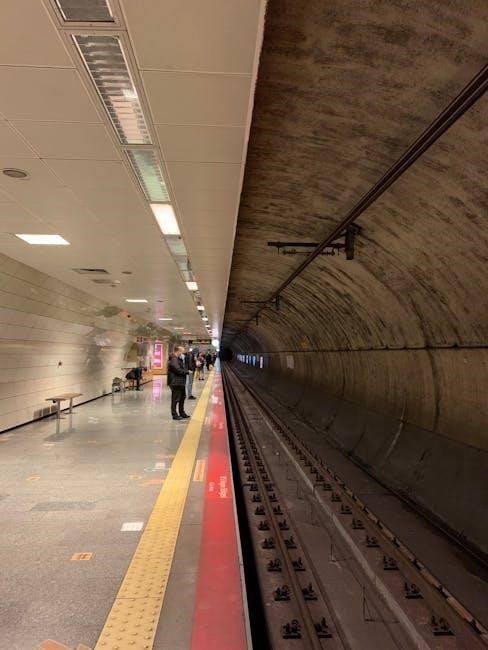
Whitehead’s masterful reimagining of the Underground Railroad transforms it from a network of safe houses into a functioning railway system, complete with iron tracks, steam engines, and stationmasters․ This literalization is a powerful metaphor for the desire for freedom and the logistical complexities of escaping slavery․
The physical railroad underscores the immense courage and ingenuity required of those who sought liberation․ It also highlights the systemic nature of slavery, requiring a coordinated effort – both from those escaping and those assisting them – to challenge the established order․ This innovative approach elevates the narrative beyond historical fiction, becoming a potent symbol of resistance and hope․
C․ State-by-State Journeys and Challenges
Cora’s perilous travels through states like North Carolina, Tennessee, and Indiana reveal uniquely horrifying manifestations of slavery and racial terror․

III․ Major Characters & Their Significance
Colson Whitehead populates The Underground Railroad with characters embodying the spectrum of human response to the horrors of slavery․ Cora, the novel’s resilient protagonist, represents the enduring spirit of those seeking freedom․ Caesar, a fellow escapee, offers companionship but also embodies the complexities of survival and the compromises one makes under duress․
Conversely, Ridgeway, the relentless slave catcher, personifies the brutal, unwavering power of the system․ He isn’t merely evil; he’s a product of, and believer in, the ideology of white supremacy․ Supporting characters, like Ethel and Martin, further illuminate the varied experiences and moral ambiguities within this historical context․ Each character serves to deepen the novel’s exploration of trauma, agency, and the lasting scars of slavery․
A․ Cora: Protagonist and Resilience
Cora, born into slavery on the Randall plantation, emerges as the emotional and narrative core of Colson Whitehead’s The Underground Railroad․ Her journey isn’t defined by inherent heroism, but by a desperate, evolving will to survive․ Initially vulnerable and marked by trauma, Cora demonstrates remarkable adaptability as she navigates increasingly dangerous and bizarre states․
Whitehead portrays her resilience not as unwavering strength, but as a hard-won capacity to endure repeated hardship and loss․ Each state she encounters tests her spirit, forcing her to confront different facets of oppression and the limitations of freedom․ Cora’s internal struggles – her fear, her longing for connection, and her questioning of hope – make her a profoundly human and compelling protagonist․
B․ Caesar: Companion and Complexities
Caesar, a fellow slave who escapes with Cora, functions as both a protector and a source of intrigue throughout their initial flight․ He’s a charismatic and determined figure, possessing a detailed knowledge of the Underground Railroad and a pre-planned route to freedom․ However, Whitehead deliberately layers Caesar with ambiguity, hinting at a past shrouded in secrecy and a potentially manipulative nature․
His motivations aren’t always transparent, and his unwavering focus on reaching a specific destination raises questions about his true intentions․ Caesar’s complexities challenge Cora, and the reader, to question the nature of trust and the compromises one makes in the pursuit of liberation․ He represents a different approach to survival – one built on planning and a degree of calculated risk – contrasting with Cora’s more reactive journey․
C․ Ridgeway: The Antagonist and Pursuit of Control
Aloysius Ridgeway, a relentless slave catcher, embodies the brutal ideology of white supremacy and obsessively pursues Cora, seeking to reassert dominance․
IV․ Key Themes Explored in the Novel
The Underground Railroad profoundly investigates the horrific brutality of slavery and the deeply ingrained systemic racism that permeated American society․ Whitehead doesn’t shy away from depicting the physical and psychological torment inflicted upon enslaved people, exposing the dehumanizing nature of the institution․
Furthermore, the novel wrestles with the concepts of freedom, agency, and the arduous path toward self-determination․ Cora’s journey isn’t simply about escaping physical bondage, but about claiming ownership of her own life and identity․
Finally, the lasting impact of trauma and the intergenerational consequences of slavery are central․ Whitehead explores how the wounds of the past continue to shape the present, impacting individuals and communities long after emancipation․
A․ The Brutality of Slavery & Systemic Racism
The Underground Railroad unflinchingly portrays the extreme physical and emotional violence inherent in the system of slavery․ Whitehead details horrific acts – whippings, sexual assault, and the casual disregard for human life – not for sensationalism, but to confront the reader with the reality of the era․
Beyond individual acts of cruelty, the novel exposes the systemic nature of racism․ Laws, institutions, and societal norms were all constructed to maintain white supremacy and perpetuate the enslavement of African Americans․
Whitehead demonstrates how racism wasn’t simply a Southern problem, but a national one, woven into the very fabric of the United States, impacting even those who opposed the institution directly․
B․ Freedom, Agency, and Self-Determination
The Underground Railroad profoundly explores the complex pursuit of freedom for enslaved people․ Cora’s journey isn’t simply about escaping physical bondage, but about claiming agency over her own life and defining her own self-worth in a world determined to deny her both․
The novel challenges the notion of freedom as a singular event, illustrating it as a continuous struggle․ Each state Cora enters presents a different form of control, forcing her to constantly re-evaluate what liberation truly means․
Whitehead emphasizes the importance of self-determination – the right to make one’s own choices and shape one’s own destiny – even within the constraints of a deeply oppressive system․ Cora’s resilience embodies this fight․
C․ Memory, Trauma, and Intergenerational Impact
The Underground Railroad reveals how slavery’s trauma echoes through generations, shaping identities and destinies long after emancipation’s promise․

V․ Historical Context & Alternate History
Whitehead’s novel deeply engages with the historical reality of slavery in the United States, drawing inspiration from accounts of the actual Underground Railroad – a network of secret routes and safe houses established to aid enslaved African Americans escaping to freedom․ However, The Underground Railroad isn’t a strictly historical novel․
It boldly diverges from documented history by portraying the Railroad as a functioning, literal railway system with tracks and engineers․ This imaginative leap serves to amplify the desperation and the sheer physical risk involved in seeking liberation․ The alternate history allows Whitehead to explore the pervasive and systemic nature of racism in a more visceral and symbolic manner, questioning what might have been if different choices had been made, or if the structures of power had been fundamentally altered․
A․ The Real Underground Railroad
Historically, the Underground Railroad was a clandestine network of abolitionists – both Black and white – who aided enslaved people in escaping to freedom, primarily to northern states and Canada․ It wasn’t a literal railroad, but a metaphorical one, utilizing coded language, secret routes, and safe houses known as “stations․”
Individuals like Harriet Tubman, a conductor who made numerous trips back to the South to guide others to freedom, were central figures․ The network relied on immense courage, resourcefulness, and a deep commitment to the cause of abolition․ While precise numbers are difficult to ascertain, it’s estimated that tens of thousands of enslaved people found freedom through the Underground Railroad before the Civil War․ It represented a powerful act of resistance against a brutal system․
B․ Whitehead’s Divergence from Historical Accuracy
While deeply researched, Colson Whitehead deliberately departs from strict historical accuracy in The Underground Railroad․ He transforms the metaphorical network into a physical railway system with trains and engineers, a powerful symbolic choice․ This alteration isn’t intended to misrepresent history, but to amplify the horrors of slavery and the desperate yearning for freedom․
Whitehead also introduces alternate historical timelines within the novel, depicting states that never abolished slavery and experimenting with radical social engineering․ These divergences serve to explore “what if” scenarios and expose the pervasive, enduring legacy of racism in America․ The novel prioritizes emotional and thematic truth over factual representation, creating a haunting and unforgettable narrative․
C․ The Novel as a Commentary on American History
The Underground Railroad powerfully critiques America’s foundational hypocrisy, exposing the brutal realities of slavery and its lasting impact on the nation’s identity;

VI․ Critical Reception & Awards
The Underground Railroad garnered widespread critical acclaim upon its 2016 release, lauded for its ambitious scope, lyrical prose, and unflinching portrayal of slavery’s horrors․ Reviewers consistently praised Whitehead’s imaginative reimagining of the historical Underground Railroad and his ability to blend historical fiction with elements of magical realism․
The novel achieved significant recognition, winning both the 2016 National Book Award for Fiction and the 2017 Pulitzer Prize for Fiction – a rare and prestigious double win․ Scholarly analysis has focused on the novel’s exploration of trauma, race, and the enduring legacy of slavery in contemporary America․
Its impact extends beyond literary circles, sparking important conversations about American history and the ongoing struggle for racial justice, solidifying its place as a modern classic․
A․ Pulitzer Prize and National Book Award
The Underground Railroad’s exceptional literary merit was swiftly acknowledged through two of the most prestigious awards in American literature․ In 2016, the novel received the National Book Award for Fiction, recognizing its powerful narrative and innovative approach to a crucial historical subject․
The accolades continued in 2017 with the awarding of the Pulitzer Prize for Fiction․ The Pulitzer committee specifically cited Whitehead’s masterful blending of historical realism and imaginative storytelling, praising the novel’s profound exploration of slavery and its lasting impact․
These awards cemented The Underground Railroad’s status as a landmark achievement, bringing wider attention to Whitehead’s work and prompting crucial national dialogues․
B․ Reviews and Scholarly Analysis

The Underground Railroad garnered widespread critical acclaim upon its release, with reviewers consistently praising Whitehead’s bold reimagining of American history․ Critics highlighted the novel’s unflinching portrayal of slavery’s brutality and its innovative narrative structure․ Many noted the power of the literalized railroad as a metaphor for hope and resistance;
Scholarly analysis has focused on the novel’s engagement with historical trauma, its exploration of racial identity, and its commentary on systemic racism․ Essays and articles examine Whitehead’s use of alternate history, the symbolism embedded within the narrative, and the novel’s contribution to African American literary tradition․
The work continues to be a subject of academic discourse, inspiring new interpretations and fostering deeper understanding․
C․ Impact on Contemporary Literature
The Underground Railroad profoundly impacted contemporary fiction, inspiring authors to explore historical trauma with innovative forms and unflinching honesty․

VII․ Symbolism & Motifs
A․ The Railroad Itself as a Symbol
The Railroad transcends a mere escape route, embodying hope, possibility, and the relentless pursuit of freedom․ Its physical manifestation—tracks, stations, and conductors—represents a tangible pathway to a better life, contrasting sharply with the intangible nature of hope for enslaved people․ It’s a powerful symbol of resistance and the collective desire for liberation․
B․ Clothing and Appearance as Markers of Status
Clothing functions as a constant visual reminder of power dynamics․ The stark differences in attire between enslaved individuals and their owners highlight the dehumanization inherent in the system․ Cora’s clothing, often ill-fitting or deliberately degraded, symbolizes her lack of agency, while the elaborate garments of the white characters signify their control and privilege․
C․ Landscapes and Their Symbolic Weight
Landscapes aren’t simply settings; they mirror the psychological and emotional states of the characters․ The oppressive forests of South Carolina, the sterile fields of Indiana, and the unsettling terrain of Tennessee each embody different facets of slavery’s brutality and the challenges Cora faces on her journey․
The Underground Railroad, reimagined as a literal train system, powerfully symbolizes the yearning for freedom and the logistical complexities of resistance․ Whitehead transforms a metaphorical network into a concrete reality, complete with tracks, tunnels, and stations, offering a tangible pathway to liberation․ This literalization underscores the immense courage and planning required for enslaved people to seek autonomy․
The railroad also represents progress, albeit a fraught and dangerous one․ Each stop along the line signifies a potential step closer to safety, yet also introduces new perils and uncertainties․ The speed and momentum of the train mirror the urgency of Cora’s flight, while the hidden nature of the system reflects the secrecy necessary for survival․ Ultimately, the railroad embodies both hope and the constant threat of recapture․
Throughout The Underground Railroad, clothing functions as a potent symbol of power, control, and the dehumanizing effects of slavery․ The stark contrast between the ragged garments of the enslaved and the refined attire of their masters visually reinforces the social hierarchy․ Cora’s initial lack of proper clothing highlights her vulnerability and lack of agency․
As Cora journeys through different states, alterations in dress – or the forced imposition of uniforms – signify shifts in her status and the ideologies of each location․ Clothing isn’t merely practical; it’s a tool for surveillance and control, used to identify and categorize individuals․ Even seemingly minor details, like hairstyles or the quality of fabric, communicate volumes about a person’s place within the oppressive system․ Whitehead masterfully uses these visual cues to expose the insidious nature of racial prejudice․
Vast plantations, dense forests, and burgeoning cities embody freedom’s elusive promise, mirroring Cora’s internal struggles and the nation’s complex history․

VIII․ Discussion Points & Further Exploration
Consider the novel’s unflinching portrayal of violence – is it gratuitous, or essential to confronting the horrors of slavery? Analyze the ambiguous ending; does Cora truly achieve freedom, or is her future perpetually uncertain?
Explore how Whitehead utilizes the fantastical element of a literal railroad to amplify the emotional and psychological realities of enslaved people․ Debate the ethical implications of Ridgeway’s character – is he simply a product of his time, or a uniquely malicious figure?
Research the historical context of each state Cora travels through, comparing Whitehead’s fictionalized depictions with documented realities․ Discuss the novel’s relevance to contemporary discussions about racial injustice and systemic inequality․ Finally, contemplate the enduring legacy of trauma and its intergenerational impact, as portrayed throughout the narrative․
A․ The Role of Violence in the Narrative
Whitehead doesn’t shy away from depicting the brutal realities of slavery, presenting violence not as sensationalism, but as a systemic tool of control and dehumanization․ Physical and psychological abuse permeate Cora’s journey, illustrating the constant threat faced by enslaved individuals․
The novel explores how violence begets violence, examining the cycles of trauma and retribution․ Ridgeway’s relentless pursuit embodies the violent enforcement of the slave system, while acts of resistance, though sometimes necessary, also carry a heavy cost․
Consider whether the graphic nature of certain scenes serves to shock the reader into acknowledging the full extent of slavery’s horrors, or if it risks exploitation․ Ultimately, the violence functions as a stark reminder of the inhumanity at the heart of the institution and its lasting consequences․
B․ The Ending and its Ambiguity
The novel concludes with Cora’s uncertain future, having seemingly escaped the immediate clutches of slavery but facing an ambiguous freedom․ The final scene, depicting her in a seemingly idyllic setting, is deliberately unsettling, prompting questions about the true nature of liberation․
Is this a genuine haven, or simply another form of control disguised as benevolence? Whitehead resists offering a neat resolution, suggesting that the trauma of slavery leaves indelible scars and that complete escape may be illusory․

The ambiguity forces readers to confront the complexities of post-emancipation life and the enduring legacy of racial injustice․ Does Cora’s story represent hope, or a cautionary tale about the limitations of freedom? The open-endedness invites continued reflection on the novel’s central themes․